Quiet Valor: Searching for the Stories Behind the Medals
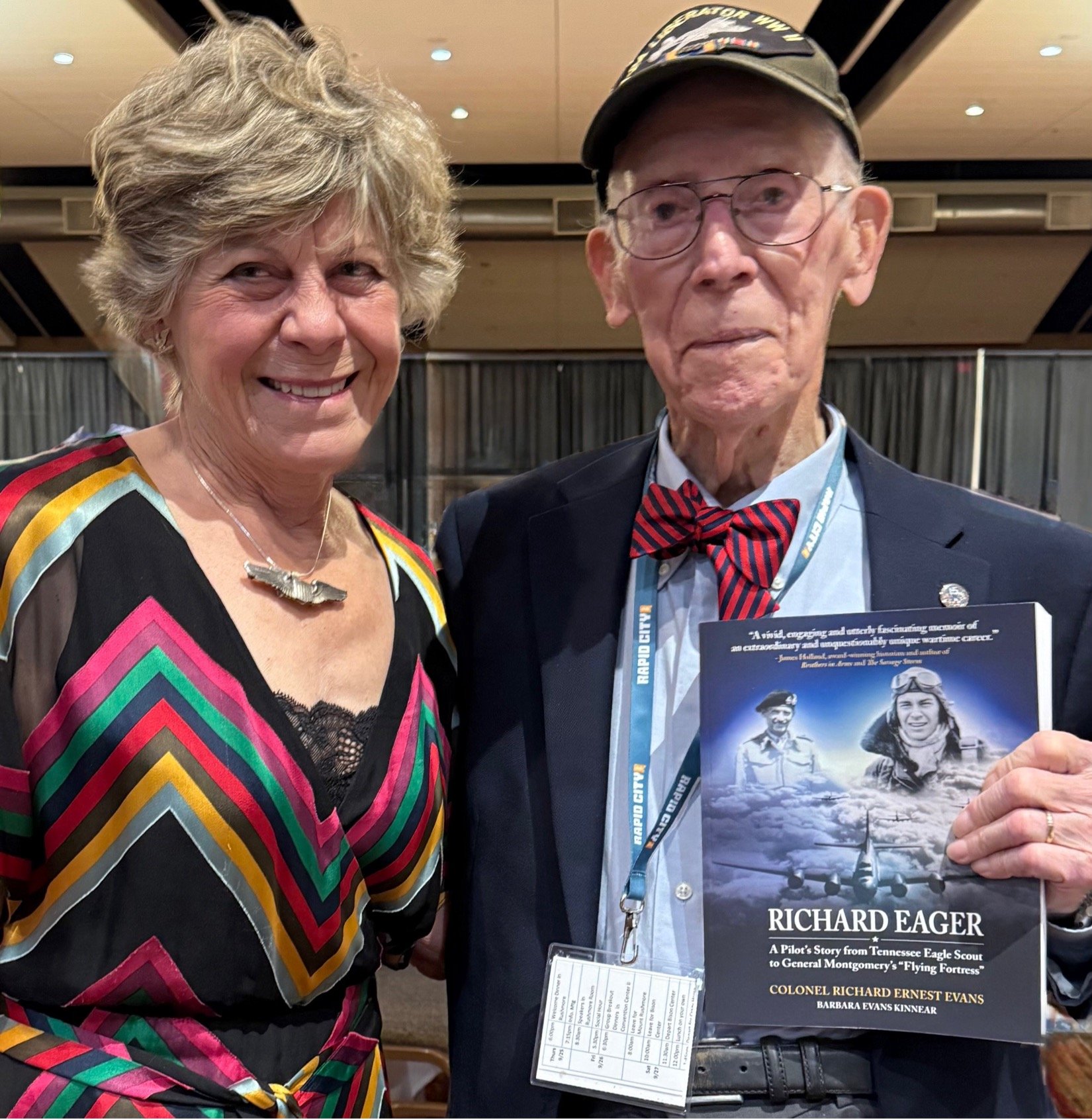
Colonel Evans never mentioned the decorations and service medals he received during his Air Force military career from December 27, 1939, to his retirement August 30, 1970. As children growing up in a military home, my brother and I were truly not aware of medals, honors, and prestige from awards. What we knew is we had a hard-working Dad, who proudly wore a uniform and flew BIG jets.
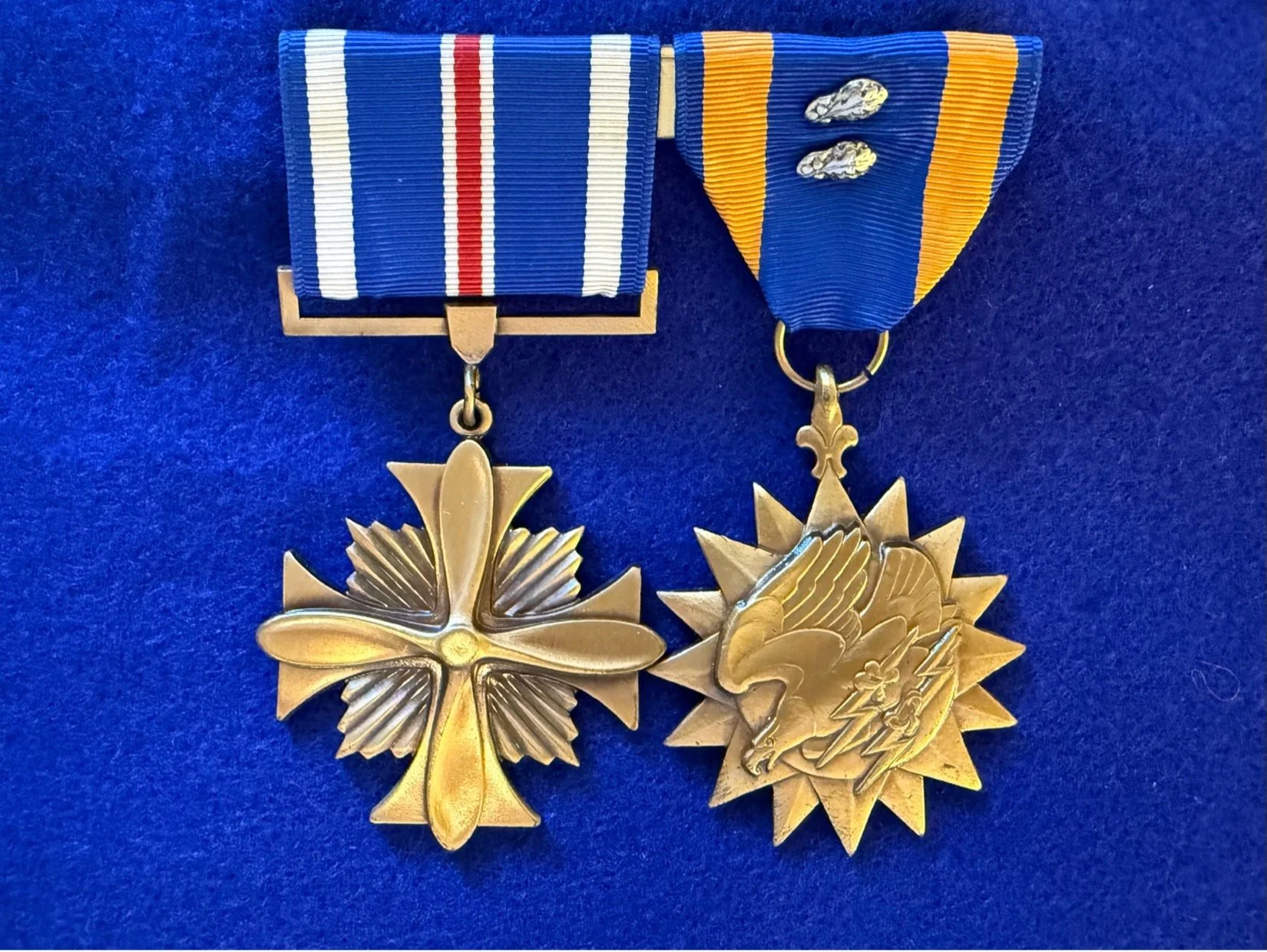
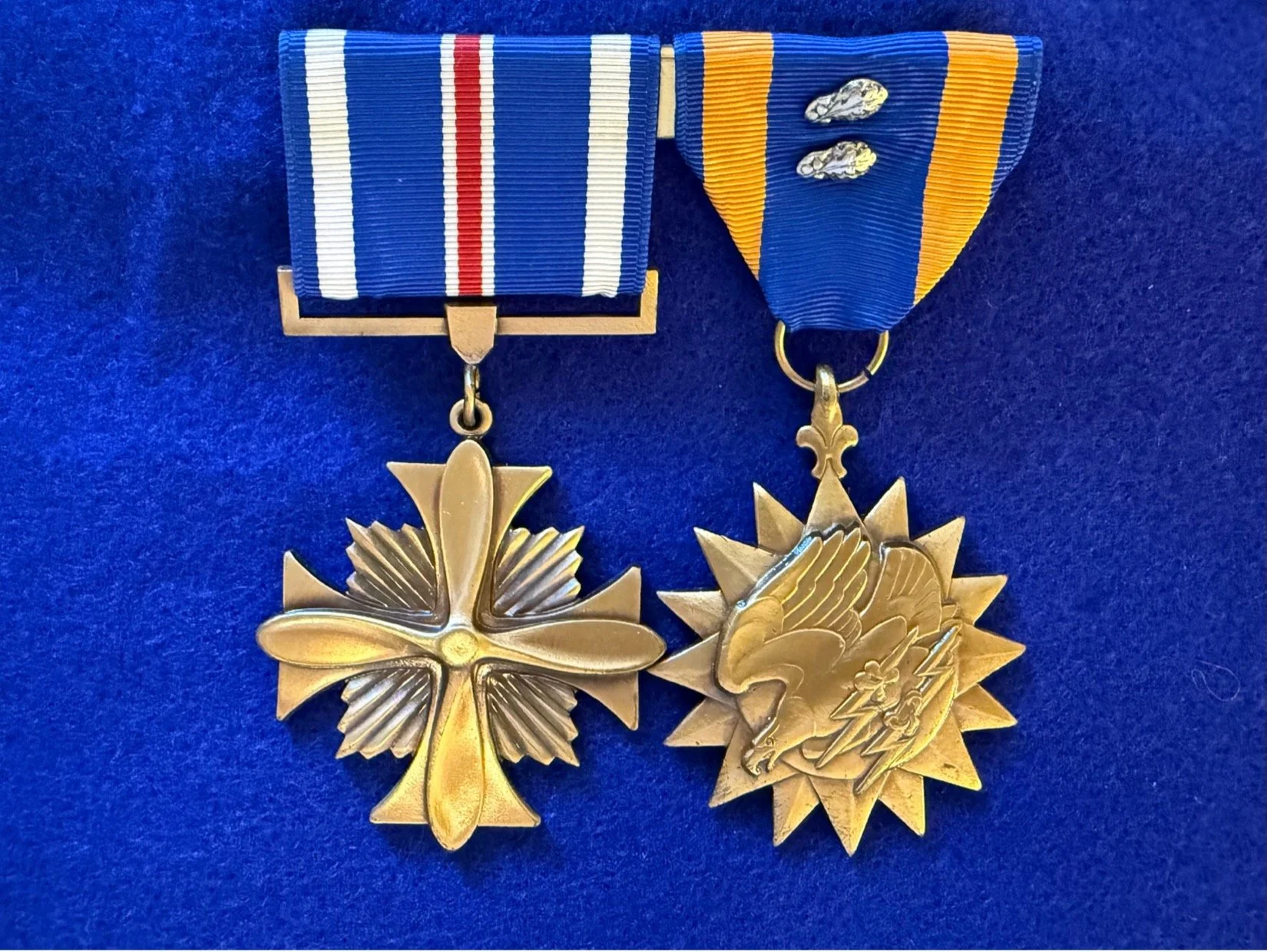
Distinguished Flying Cross (left) and Air Medal, Two Silver Oak Leaf Clusters (right)
What were the Air Force awards? What do those colorful ribbons mean, proudly displayed on the left side pocket of a handsome blue coat worn by a mighty proud soldier-pilot?
Decorations and medals are given to all Air Force personnel, regardless of rank, to recognize and incentivize extraordinary heroism, personal valor, and exceptional, meritorious service. Because aerial combat and flight operations involve unique hazards and require highly technical skills, the military established specific honors—like the Distinguished Flying Cross and the Air Medal—to acknowledge these distinct contributions.
When the work began to publish Colonel Evans' book, his military awards were noted—and what a nice surprise we found! We were able to research and discover the reasons for those awards. For example, why did he receive two very prestigious decorations, the Distinguished Flying Cross (DFC) and the Air Medal with two silver Oak Leaf Clusters?
Colonel Evans' Distinguished Flying Cross was awarded on February 17, 1944. We discovered this citation document from the HQ Fifteenth Air Force, GO No. 53 Commanding General, Major General Nathan Twining. The full citation about Evans’ DFC reads:
"Extraordinary achievement while participating in aerial flight in the Mediterranean Theatre of Operations as group leader and pilot of a B-17 type aircraft. On an attack upon the marshalling yards at [CENSORED], Italy, on 16 December 1943, Major Evans led a formation of thirty-two (32) Flying Fortresses, and despite prohibiting weather conditions as evidenced by poor visibility and heavy undercast, Major Evans exercised sound judgment and great skill so as to reach the target with the entire formation. Unable to follow the scheduled plans, Major Evans regrouped his flight and by entering upon a second method of attack took full advantage of a cloud opening to make possible the outstanding fulfillment of his mission which resulted in grave damage to this highly important enemy rail center. By his aggressive undertaking and initiative under difficult, perilous conditions, together with his superior leadership and devotion to duty throughout his outstanding record of over fifty (50) combat missions against the enemy, Major Evans has upheld the highest traditions of the Military Service and has reflected great credit upon himself and the Army Air Forces of the United States."
With further research, we learned the mission was over Padua, Italy. 200 tons of 500-lb General Purpose bombs were dropped within a six minute period, which severely disrupted Axis regional rail communications and cargo transport. The raid occurred shortly after the 99th BG relocated from Oudna, Tunisia to Tortrella Airfield near Foggia, Italy, earlier in December. Operating out of their new Italian base allowed the 5th Bomb Wing to hit strategic logistical bottlenecks deep in northern Italy, Austria and Germany to choke off German troop reinforcements and supply lines.
Colonel Evans' first Air Medal was awarded May 7, 1943, and the document was signed by Commanding General Carl "Tooey" Spaatz. The Air Medal is awarded for meritorious achievement while participating in five aerial flight, sorties, against the enemy. Two silver Oak Leaf Clusters were later added to Evans' Air Medal ribbon. A silver Oak Leaf Cluster typically represents five additional awards of the medal so two silver clusters would indicate roughly the 11th award.
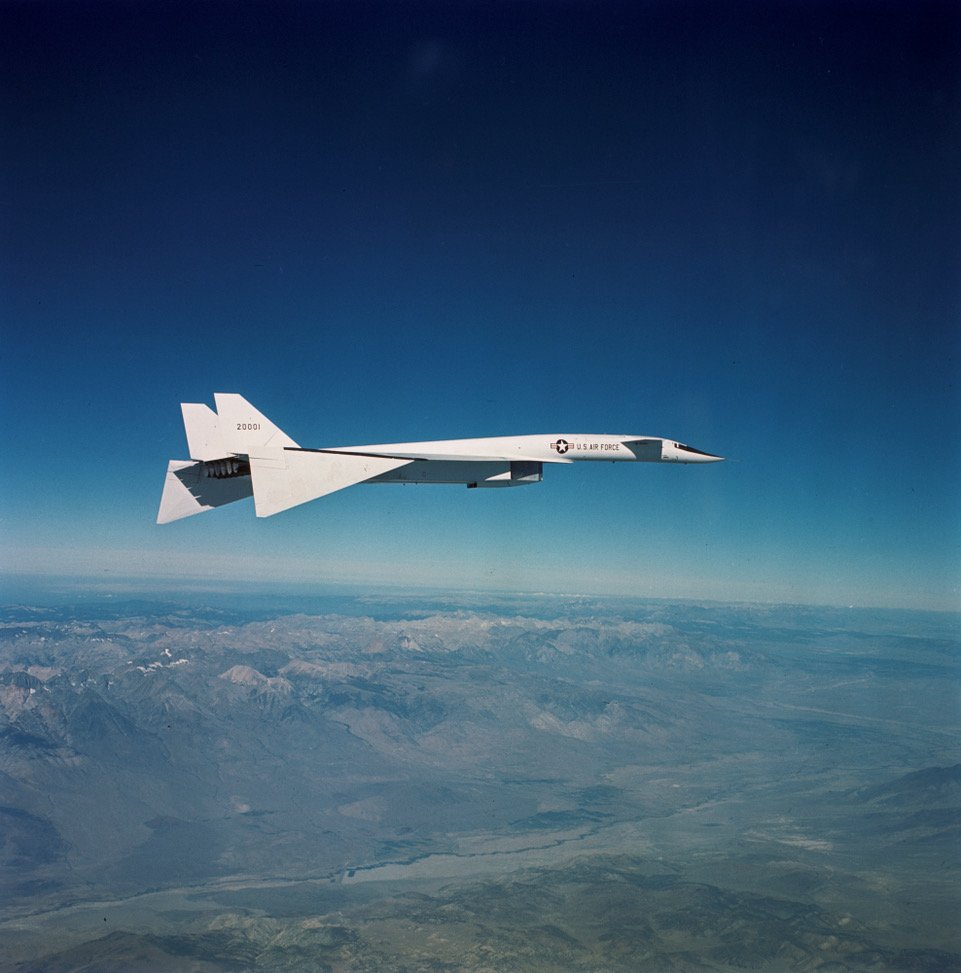
Evans was also honored to wear additional (12) ribbons on his military uniform, representing significant medals and awards. A photograph of those ribbons can be found on page 338 of his book. Evans’ combat record in the Mediterranean, North African, and Pacific theaters of operations during World War II was truly distinguished. When the Korean conflict began, Evans was asked to return to Air Force service. The allure to serve and to fly those new jets—the B-47, B-52, and later the B-58—was too strong to ignore. And as he continued flying and leading, more ribbons were added to his ribbon bars.
Barbara Evans Kinnear
Further Articles